
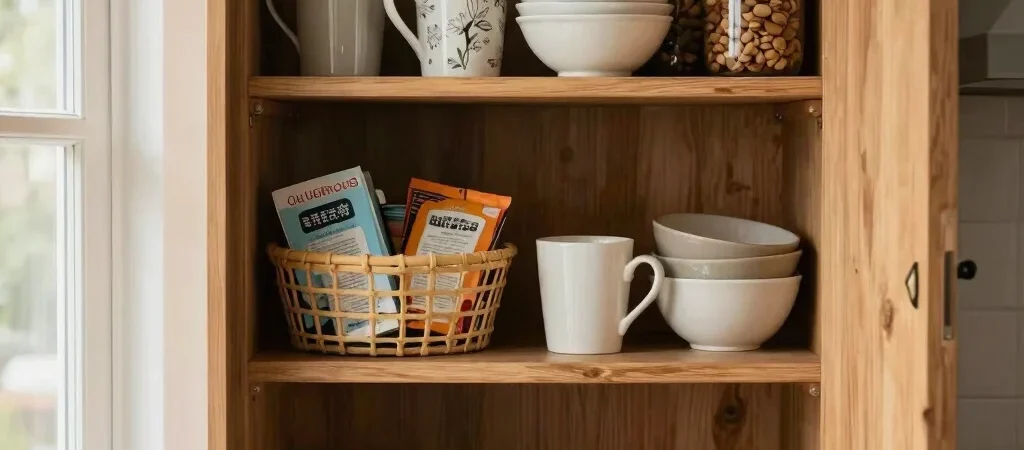
A cupboard can look full even when it holds only a handful of useful things: a mug pushed behind a stack of plates, a half-used bag of rice, and three containers without lids. The fix is not necessarily more organizers. First make the contents easier to see and reach.
Sort by Everyday Use
Bring the breakfast bowls, everyday glasses, and coffee supplies together if they are part of the same morning routine. Put occasional serving dishes higher or farther back, where they can stay until needed. Grouping by use saves the small daily search through unrelated items.
Choose Containers After
Before buying baskets or decanting dry goods, check the shelf height and measure the space you want to organize. A wide bin can be handy for packets, but awkward if it blocks the items behind it. Keep original packaging when the cooking instructions or product details are useful, and choose clear containers only where seeing the contents helps.
Make Room for Real Life
Leave a little breathing room for groceries that have not found their permanent spot yet. If a shelf is packed to the edge, one new jar can undo the whole arrangement. The most practical cupboard is not the one that looks identical in every photo; it is the one where you can put things away without rearranging the shelf.